Welcome to BrassAgent
Pan-Brassicaceae Multi-Omics & AI Agent Platform
About BrassAgent
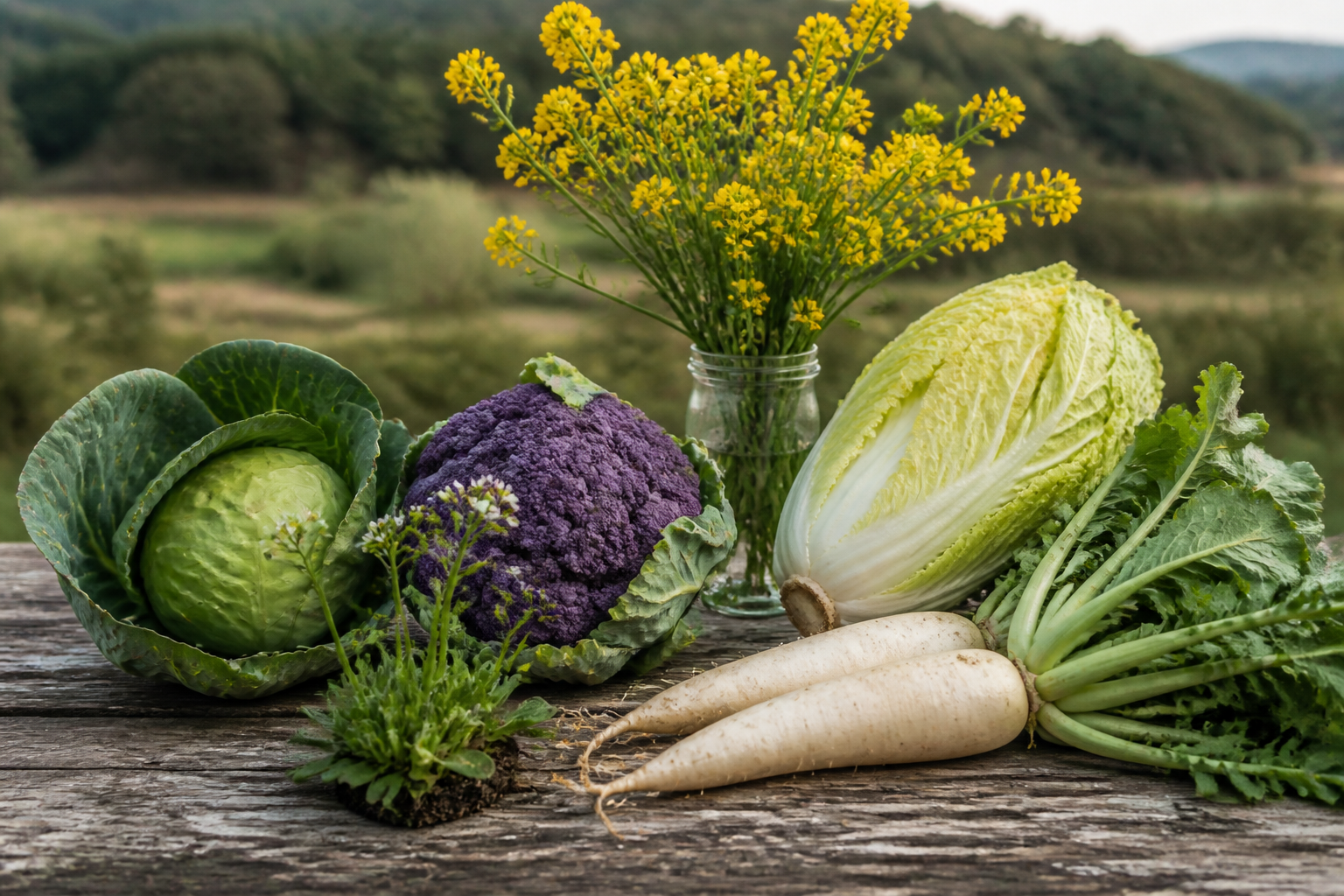
BrassAgent is a standalone multi-omics and AI-agent platform for the Brassicaceae family, integrating reference genomes, gene annotations, protein structures, homology, functional domains (Pfam), and a literature knowledge base for five core species: Arabidopsis thaliana, Brassica napus (rapeseed), Brassica rapa (Chinese cabbage), Raphanus sativus (radish), and Brassica oleracea (cauliflower).
The platform pairs a natural-language research agent with searchable genome, protein, and literature modules, enabling rapid gene-level exploration, cross-species orthology, and evidence-grounded literature synthesis.
Latest Brassicaceae Research
(2026-07-12)Cereal crops collectively account for more than half of global human caloric intake, yet the molecular mechanisms governing their root systems under water and nitrogen limitation remain poorly understood relative to their agronomic importance. The C-terminally encoded peptide (CEP) family has emerged, primarily from work in Arabidopsis thaliana and Medicago truncatula, as a class of post-translationally modified peptide hormones that coordinate nitrogen demand signalling through a root-to-shoot-to-root relay involving CEPR1 leucine-rich repeat receptor-like kinases and phloem-mobile CEPD glutaredoxins, regulate lateral root gravitropic set-point angle through integrated auxin and cytokinin pathway interactions, and contribute to abiotic stress responses through stabilisation of AUX/IAA transcriptional repressors under osmotic stress. This review synthesises CEP biology with the specific architectural and agronomic characteristics of cereal root systems, explicitly distinguishing between findings established in model dicots, evidence for receptor-ligand conservation in cereals, and mechanisms that remain untested in crops. CEPR1 orthologues in barley, maize, and rice restore wild-type phenotypes in Arabidopsis complementation assays, and CRISPR-Cas9 knockout of CEPR1 in barley confirms effects on seminal root angle, though an associated fecundity defect highlights translational complexity. Proposed connections between CEP signalling and ABA pathways remain hypothetical. In wheat, TaCEP15 modulates primary root length and drought tolerance through a receptor pathway mechanistically distinct from the canonical CEP-CEPR1-CEPD nitrogen relay, indicating functional diversification within the CEP family. Five tractable research priorities are identified, and CRISPR-based approaches, synthetic peptide application, and marker-assisted selection are discussed as near-term strategies for cereal crop improvement under drought and nitrogen-limited conditions.
Oilseed rape (Brassica napus) serves as a cornerstone of global vegetable oil production, yet its genetic improvement has historically been impeded by a complex allopolyploid genome. This review synthesizes the transformative evolution of rapeseed genomics, traversing from initial fragmented references to the modern era of gap-free Telomere-to-Telomere (T2T) assemblies and graph-based pan-genomes. We highlight how these advanced resources resolve previously inaccessible repetitive regions and centromeres, revealing how structural variations (SVs) and homoeologous exchanges (HEs) drive key adaptive traits and morphotype diversification. Furthermore, we examine the integration of large-scale resequencing with sophisticated multi-omics pipelines to bridge the gap between statistical associations and biological causality. Through case studies, such as the characterization of BnRRF for seed weight and BnA09MYB47a for seed coloration, we illustrate the power of combining transcriptomics with Clustered Regularly Interspaced Short Palindromic Repeats-associated Protein 9 (CRISPR-Cas9) for functional validation. Finally, we explore the frontier of "Genomic Design," where Artificial Intelligence (AI) algorithms like Target-Oriented Prioritization (TOP), combined with Speed Breeding 2.0 protocols, promise to accelerate the development of next-generation cultivars. This synthesis underscores the pivotal shift from descriptive genomics to the precision engineering of climate-resilient, high-yielding polyploid crops.
The IDA/IDL family expanded in eudicots, was retained in desiccation‑tolerant but lost in desiccation‑sensitive Gesneriaceae. BhIDA1 evolved unique sequence variations to activate desiccation tolerance in Boea hygrometrica but not in Arabidopsis. The inflorescence deficient in abscission (IDA) peptide family is known for its roles in organ abscission, senescence, and cell separation, yet whether IDA peptides contribute to desiccation tolerance (DT) is unknown. In this study, we identified eight IDA/IDL family members in the resurrection plant Boea hygrometrica, all harboring the conserved ePIPP domain. Phylogenetic analysis across 35 plant species revealed that the IDA/IDL family is absent in charophytes, bryophytes, lycophytes, gymnosperms, and basal angiosperms, appears sporadically in monocots, and underwent lineage‑specific expansion in basal eudicots and further expansion in core eudicots. Notably, IDA/IDL genes have undergone markedly loss in Gesneriaceae desiccation sensitive species. Compared with IDA homologs from other species, BhIDA1 harbors unique variations at positions 7 (T instead of S) and 12 (N instead of R/K) of the mature IDA peptide. Transcript abundance analysis showed that BhIDA1 was significantly induced by dehydration. Exogenous application of synthetic mBhIDA1 peptide and transient overexpression of BhIDA1-GFP both enhanced DT in B. hygrometrica, but had no detectable effect on drought survival in Arabidopsis thaliana. Our findings reveal the lineage‑specific expansion and contraction of the IDA/IDL family in angiosperms, and identify BhIDA1 as a positive regulator of DT in B. hygrometrica. This study provides the novel insights into peptide hormone-mediated DT in resurrection plants.
External Resources
Cite Us
If you find this platform helpful for your research, please cite:
BrassAgent: An AI-driven interactive assistant for multi-omics and structural analysis in Brassicaceae (manuscript in preparation).